
Phasing Out 2G and 3G
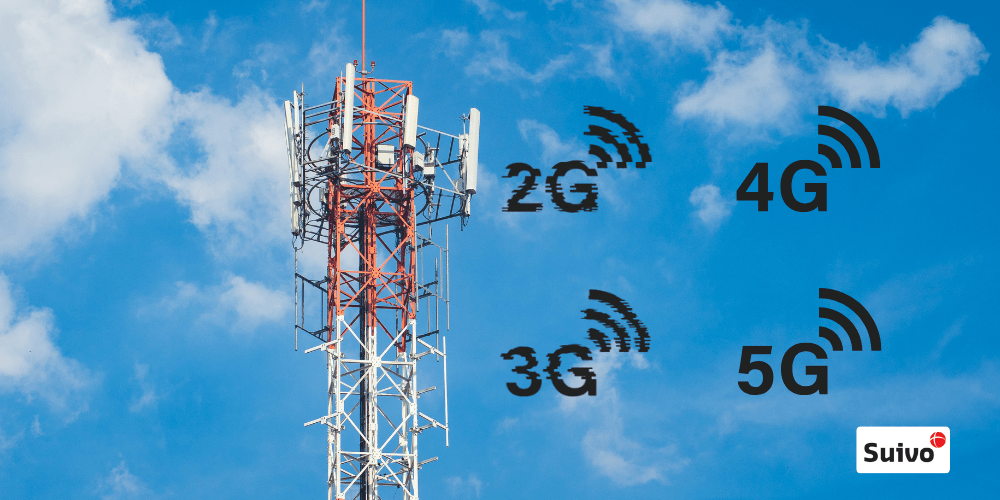
Telecom providers are actively phasing out 2G and 3G, the technologies that once formed the backbone of our mobile communication. But what does this mean for you? Why are 4G and 5G now taking center stage, and what are the differences? Discover how this evolution impacts your operations and how to stay prepared in an increasingly fast-paced digital world.
Key takeaways
- Telecom providers are phasing out 2G and 3G to reuse their frequency bands for faster, more efficient 4G and 5G.
- Devices that rely only on 2G or 3G, such as older phones, trackers and black boxes, will no longer connect.
- Devices on 4G/5G LTE-M with a 2G/GPRS backup keep working and only lose the backup option.
- Check whether your devices are 4G or 5G compatible and switch to 4G/5G hardware where needed.
What Does 2G and 3G Mean?
2G (second generation) and 3G (third generation) are mobile network technologies that laid the foundation for the wireless communication we rely on today.
- 2G, introduced in the 1990s, enabled digital voice calls and SMS messaging.
- 3G brought mobile internet to life, paving the way for video calls, email, and web browsing on phones.
While these technologies were groundbreaking in their time, the world of mobile networks is constantly evolving, leading to their planned obsolescence.
Why Are 2G and 3G Being Phased Out?
The phase-out of 2G and 3G is driven by their technological limitations, which can no longer meet the demands of modern communication. Telecom operators aim to repurpose the frequency bands currently used by 2G and 3G for faster and more efficient technologies like 4G and 5G.
This transition allows providers to deliver:
- Improved coverage
- Higher speeds
- More reliable services
Potential Impact on Your Devices
Affected Devices
- In Belgium the 3G networks were switched off in 2025, and Orange, Proximus and Telenet/BASE will shut down their 2G networks in the course of 2028 and 2029, each on its own schedule. Mobile devices and black boxes that rely only on 2G or 3G lose their connection when their network is switched off.
Unaffected Devices
- Devices using 4G/5G LTE-M with 2G/GPRS backup will lose only the backup option.
Recommendation:
Switch to 4G/5G-compatible hardware to maintain uninterrupted data communication.
Consequences of the Phase-Out
The discontinuation of 2G and 3G means that devices relying solely on these networks will no longer connect. This could affect:
- Older mobile phones: Unable to make calls, send texts, or access the internet.
- IoT devices: Such as trackers, black boxes, and systems dependent on 2G/3G connectivity.
Action Step:
Verify if your devices are compatible with 4G or 5G to ensure service continuity.
What does 4G and 5G mean?
4G (fourth generation) and 5G (fifth generation) are the latest advancements in mobile network technology.
- 4G delivers fast downloads, greater bandwidth, and supports applications like video streaming and cloud services.
- 5G builds on this with:
- Unprecedented speeds
- Ultra-low latency
- Support for significantly more connected devices
Benefits of 4G and 5G
Upgrading to 4G and 5G offers future-ready technologies:
- Faster Speeds: Download and upload at unprecedented rates.
- Improved Reliability: Reduced disruptions, even in crowded areas.
- Enhanced Connectivity: Ideal for IoT solutions like smart sensors and trackers.
For businesses relying on connected devices, 4G and 5G open up new possibilities.
By embracing these advancements, you can position yourself to thrive in a rapidly evolving digital landscape.
Still got some unanswered questions? Feel free to contact us and we’ll sort things out.
Frequently asked questions
Why are 2G and 3G networks being switched off?
2G and 3G have technological limits that can no longer meet the demands of modern communication. Telecom operators want to reuse the frequency bands of 2G and 3G for faster and more efficient technologies like 4G and 5G. That gives better coverage, higher speeds and more reliable services.
Will my GPS tracker stop working when 2G and 3G are switched off?
It will if it relies only on 2G or 3G: those devices will no longer connect. Trackers, black boxes and other IoT devices that depend on 2G or 3G connectivity are affected. Devices using 4G/5G LTE-M with a 2G/GPRS backup keep working and only lose the backup.
What happens to devices with LTE-M and a 2G backup?
Devices that use 4G/5G LTE-M with a 2G/GPRS backup are not cut off when 2G and 3G disappear. They only lose the backup option. Their main data connection keeps running on 4G or 5G, so these trackers and black boxes stay connected without new hardware.
How do I prepare my devices for the 2G and 3G phase-out?
Check whether each device, from phones to trackers and black boxes, is compatible with 4G or 5G. If it is not, switch to 4G/5G-compatible hardware to keep data communication running without interruption. Start with older devices that rely on 2G or 3G only, because they will stop connecting.
What is the difference between 4G and 5G?
4G delivers fast downloads and greater bandwidth, and supports applications like video streaming and cloud services. 5G builds on this with much higher speeds, ultra-low latency and support for significantly more connected devices. Both suit IoT solutions like smart sensors and trackers.
Asset management
Your Toolbox for Smarter Asset Management
See how Suivo tracks tools, containers and equipment, what they cost you and where they actually are.
Explore asset management